 Staff
Staff

As artificial intelligence becomes increasingly ingrained in education, Dr Wael I. Nasr, Founder, Chapters & Co examines the risk of cognitive overreliance and argues for a stronger focus on the human capabilities AI cannot replace
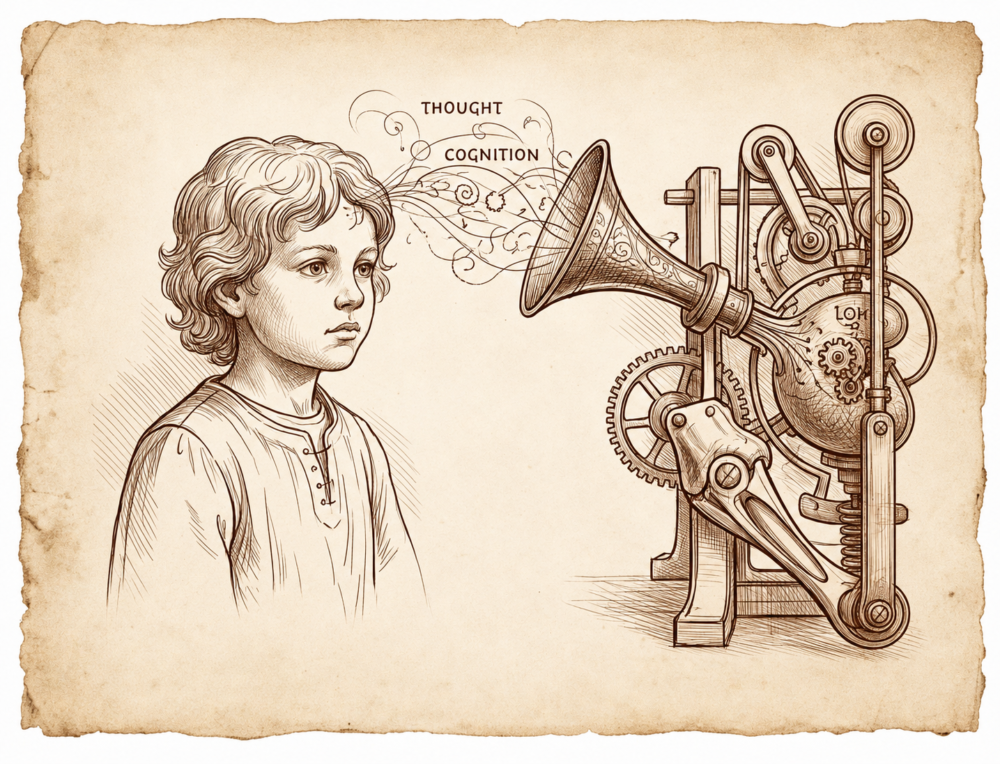
Dubai, Sept 22, 2026: Throughout history, technological advancements have significantly amplified humanity’s ability to shape the world. From the wheel to the printing press to the internet, each tool has enhanced a particular aspect of human capability. However, Artificial Intelligence (AI) is different. It is different in the sense that unlike its predecessors, AI encroaches not on our muscles or our reach, but on our minds. For the first time, one of our tools challenges what has always been the defining characteristic of our species, our intelligence. This raises a critical question: as AI grows more capable, will Human Intelligence (HI) diminish?
While AI offers extraordinary benefits, it also poses significant dangers if not integrated thoughtfully. Educators, researchers and thought leaders have been warning of a potential cognitive atrophy that could result from overdependence on intelligent machines. We therefore must emphasise the value of developing and protecting HI in this new era of AI.
The nature of the concern
The application of AI technologies is no longer limited to industrial automation or data processing. It now writes stories, composes music, diagnoses diseases and can predict legal outcomes. In education, AI tools generate lesson plans, grade essays and tutor students. While these capabilities are undeniably helpful, one must question: What happens when human minds stop engaging in these tasks themselves?
The risk is that we become passive users of intelligence rather than active creators. As AI systems become more adept and ubiquitously available, we begin to delegate more thinking to these machines, not just computation, but reasoning, creativity, problem-solving and decision-making. This trend could eventually lead to the dulling of the very skills that have defined our species and enabled our progress: curiosity, critical thinking, ethical reasoning and invention.
Concerns from the educational field
This concern is echoed by numerous educators and researchers across the world.
Dr Grant Blashki, Associate Professor at the University of Melbourne, refers to this phenomenon as “AI apathy.” In his essay titled As AI Gets Smarter, Are We Getting Dumber?, Blashki warns of the temptation to outsource too much cognitive effort to AI tools. He argues that while automation is efficient, it can diminish the human need to struggle through problems—a necessary process for building intelligence and resilience.
Educator and author John Spencer has coined the term “cognitive atrophy” to describe the decline of mental agility due to excessive reliance on AI. In his blog, he advocates for maintaining student curiosity and deep learning experiences. He warns that the more we automate creative and critical processes, the less likely we are to engage the faculties that drive these processes.
Such concerns have also been acknowledged at the institutional level. The US Department of Education’s Office of Educational Technology released a report, Artificial Intelligence and the Future of Teaching and Learning, which emphasises that while AI has the potential to enhance education, it must not replace the cultivation of uniquely human skills such as empathy, ethics, creativity and critical thinking. The report stresses the importance of human-centered design in educational technology, ensuring that AI tools support rather than supplant cognitive development.
The psychology of overreliance
Behavioural scientists have weighed in as well. A recent Psychology Today article described how reliance on AI can shorten attention spans, reduce perseverance in problem-solving and diminish motivation to solve problems independently. These changes affect and erode the essential foundations of learning, making students ever more dependent on AI systems to think for them.
It is important to note that human intelligence thrives on challenge. The effort we make to understand, to question, to synthesise and to innovate is what stimulates actual neural growth and intellectual maturity. When AI removes these challenges, it risks undermining our capacity to learn. Tasks that once required deep thought can become push-button exercises. If students are not taught to reflect, critique and reason independently, the richness of learning will be lost.
The role of education: safeguarding HI
If the threat to HI is real, education must become its foremost defender. This means that we should not rush but rather approach the integration of AI in education carefully and methodically. It is not a matter of simply adding AI literacy to the curriculum or providing students with AI learning technologies. We must simultaneously strengthen the foundations of human cognition. We must teach students how to use AI without becoming used by it.
- Critical thinking and metacognition: Students should be taught to question AI outputs, analyse its decisions and evaluate the evidence and sources it provides. They must also learn to critically analyse their own prompts and the ways in which they engage with AI.
- Creative expression: While AI can generate poetry and art, it has no real-life experiences from which to create them. Education must prioritise activities that foster self-reflection, original thought, emotional insight and storytelling, drawing on life experiences.
- Ethical reasoning: As AI systems make more decisions, having a deeper understanding of ethics becomes vital. Students should engage in constructive discussions about fairness, bias, accountability and the social impact of AI.
- Problem-based learning: Educators should present open-ended problems, especially those reflecting real-life situations requiring human insight thus keeping original thought and the human in the loop.
HI and AI together
The goal is not to resist AI but to integrate it in a way that elevates rather than replaces us. Just as calculators did not eliminate the need for understanding arithmetic, AI should not eliminate the need for reasoning, creativity, or empathy.
Rather than allowing AI to take over cognitive tasks, we must use it not only as a partner in thought but as a tool that exercises human cognition. We can allow AI to handle repetitive analysis, freeing humans to focus on insight and synthesis. But this balance must be taught. Without conscious and deliberate design, AI may erode the very skills it was meant to augment.
The concept of cross-intelligence synergy must become central to educational discourse. Just as we discuss cross-linguistic transfer in bilingual education, we can talk about cross-intelligence transfer: how insights gained from using AI can be channeled to strengthen HI, and vice versa.
Artificial Intelligence represents one of humanity’s greatest technological advances. But it also marks a pivotal point. For the first time, a tool we have created encroaches on the very fundamental aspects of our species, our intelligence, our minds. The challenge is not merely technical, but existential: how do we preserve and elevate Human Intelligence in a world where Artificial Intelligence grows ever more capable?
Educators, policymakers and parents must now recognise the importance of the dual task at hand: to prepare students to thrive in an AI-driven world while ensuring they do not lose the uniquely human capabilities that define us. If we succeed, AI can be a force for intellectual empowerment. If we fail, it may become a mirror in which we watch our minds quietly fade.
Now more than ever, we must teach students not only to think with machines, but to think for themselves.