
 Staff
Staff
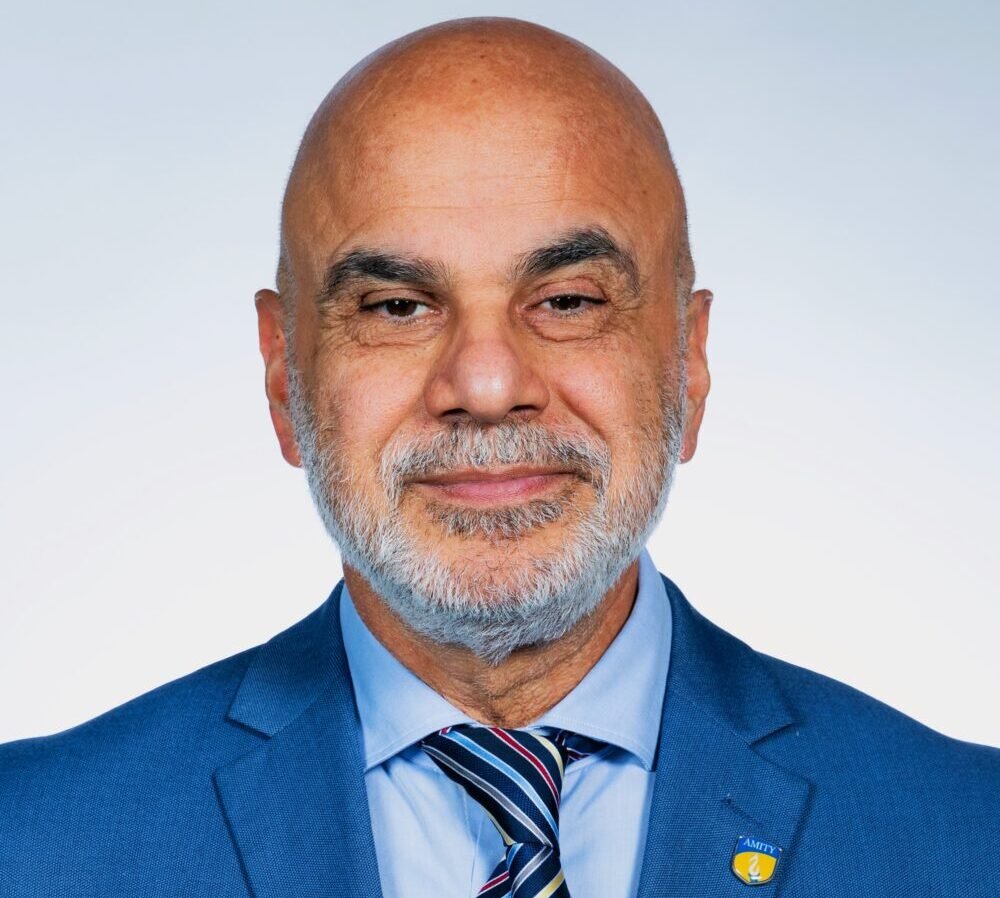
Dr Mo Mohasses, Director, Centre for Teaching and Learning, Amity University Dubai reflects on why the UAE’s new AI-focused accreditation standards mark a defining moment for Centres for Teaching and Learning and why institutions can no longer afford to treat AI literacy as optional
Dubai, Jul 28, 2026: I have spent more than 25 years working in UAE higher education, first in the public sector, then in the private, and for the past several years leading the Centre for Teaching and Learning at a university in Dubai. Each wave of change has asked something different of those of us in academic development. But I am not sure any shift has felt quite as consequential, or as alive with possibility, as the one we are living through right now.
Artificial Intelligence is not coming to UAE higher education. It is already here; in our students’ phones, their assignment drafts, the way they research and write and think. The question is no longer whether AI will reshape teaching and learning in this region. The question is whether institutions are responding with the seriousness the moment demands.
The framework expands
For Centres for Teaching and Learning (CTLs) in the UAE, the Commission for Academic Accreditation’s Outcomes-Based Framework has long defined the quality agenda. For years, assessment was the one KPI where CTLs could most directly demonstrate their contribution, designing valid, outcomes-aligned evaluations that genuinely measured student learning. That was not a narrow mandate, but it was, in honesty, a limited one.
The latest Outcome-based Framework (OBF) for Universities revision in the UAE changes that. The UAE Commission for Academic Accreditation (CAA) has introduced a new AI-Enabled Teaching and Learning KPI, asking institutions to demonstrate how effectively they integrate AI across four dimensions: programme design, programme delivery, assessment and performance analysis, and faculty readiness. Each sits squarely within the CTL’s domain. Together, they represent a long-overdue acknowledgement that teaching quality in the 21st century cannot be assessed without reference to how institutions prepare their people for an AI-integrated world.
Over 25 years, I have watched the conversation about technology in education follow a predictable arc… excitement, anxiety, cautious consensus, and eventually, quiet normalisation. I have seen that cycle with the internet, with learning management systems, with plagiarism detection software. Each time, the institutions that moved thoughtfully and early were better positioned than those that waited.
AI feels different in scale and speed. And with less than a year until I close this chapter of my career, I find myself wanting to leave something behind that actually matters — not just a programme or a workshop, but a genuine shift in how our university thinks about preparing its students and faculty for the world they are entering. That is what has driven the work our CTL has been doing.
Rethinking assessment
When AI became widely accessible, the first question our faculty asked was: does my assessment still work? Well, we chose not to treat this as a crisis but as an invitation; to design assessments that are more authentic and harder to shortcut: oral defences, process portfolios and scenario-based challenges rooted in real professional contexts. Our ongoing faculty training frames the question not as ‘How do we stop students using AI’ but ‘How do we design learning experiences that AI cannot substitute, and that teach students to use AI well?’
AI in lesson planning & delivery
We have also been working with faculty on how AI can transform preparation and delivery. When a tool handles certain aspects of content development more efficiently, the instructor is freed to focus on what AI cannot replicate: the human relationship, intellectual provocation, reading a room, and the mentorship that happens in the margins of a lecture. Our training is designed not to replace professional judgement but to reduce cognitive load so faculty can invest more deeply in the dimensions of teaching that are irreducibly human.
One initiative that has genuinely shifted the conversation is our faculty workshops on Google NotebookLM, an AI tool that synthesises knowledge from documents you upload, grounding its responses in your own sources rather than the open web. Faculty preparing complex lectures can use it to navigate large volumes of reading; researchers use it to surface connections across papers. The most telling outcome: faculty who arrive asking ‘Should I be worried about AI?’ typically leave asking ‘What else can I do with this?’ That shift from anxiety to curiosity is, I would argue, one of the most important things a CTL can cultivate right now.
AI literacy
Perhaps the initiative I am most proud of is our new General Education course in AI literacy, designed not for technology specialists but for every student, regardless of discipline. It addresses the questions any educated professional in 2026 must be able to engage with: how AI works, where it fails, how to use it ethically, and how to read AI-generated content critically rather than accepting it at face value. These are the literacy questions of our era, as essential as media or financial literacy. Institutions that treat them as optional are quietly failing their students.
Alongside the course, we run targeted AI workshops for final-year students standing at the threshold of the workforce. These are practical and forward-looking: how to use AI professionally without compromising your own thinking, how to present AI competency as a genuine career asset, and how to navigate the ethical expectations employers increasingly apply to AI use. Repeatedly, students describe these sessions as among the most relevant preparation they received at university, which says everything about how central AI literacy has become to employability in this region.
Beyond compliance
The CAA’s new KPI is not, at its core, about compliance. It is a formal acknowledgement that AI readiness is now a dimension of educational quality and not a luxury or an innovation agenda, but a baseline expectation. For CTLs, it validates something we have long argued: that pedagogy matters, that faculty development matters, and that the experience of learning matters. The new pillar says what needed saying — the way your institution responds to AI in teaching and learning is a quality question, and the CTL is the right place to lead that response.
Twenty-five years gives you perspective on what endures and what fades. What I have learned above everything else is that technology does not transform education. People do. The tools change, the frameworks evolve, the policy landscape shifts. But what actually changes a student’s experience is whether the person on the other side of that encounter has thought carefully about their purpose, their practice and their responsibility.
That is what CTLs exist to support. And that, I think, is what this moment is really asking of us.