
 Staff
Staff
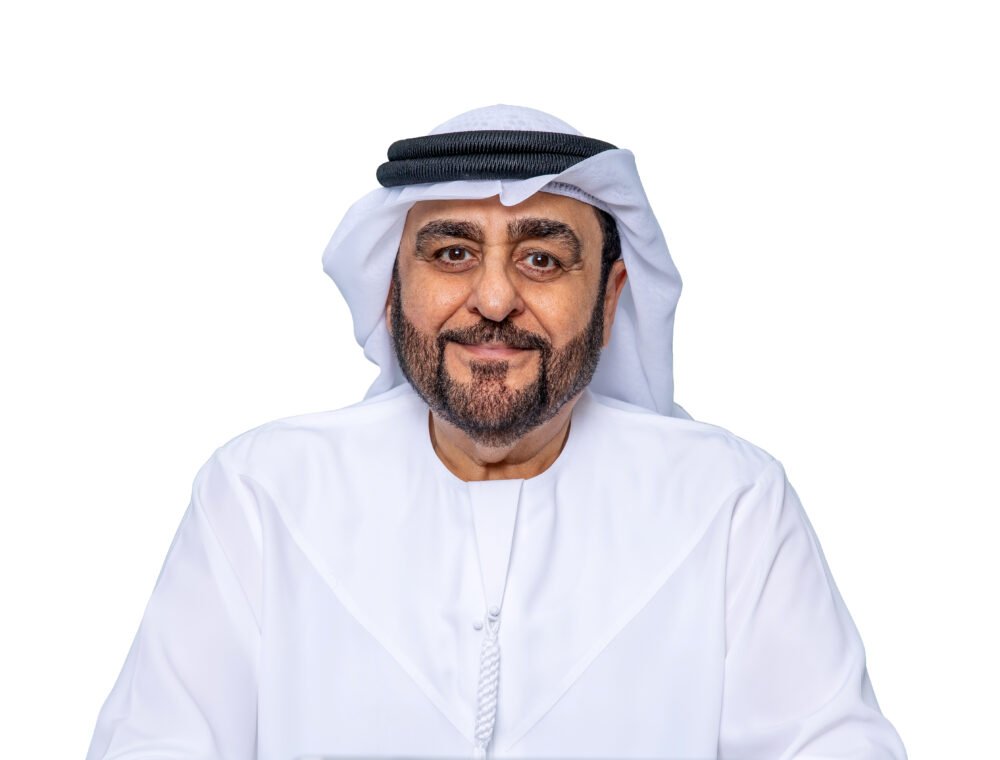
From lifelong learning to AI and the changing role of the campus, Dr Mansoor Al Awar, Chancellor, Hamdan Bin Mohammed Smart University argues that the future university will be defined less by where it exists and more by the capabilities and impact it creates
Dubai, Aug 25, 2026: For centuries, we have answered the question ‘What is a university?’ largely by describing a place. A campus. Faculties. Classrooms. Laboratories. Libraries. A period of study. And, at the end, a degree.
That model has served humanity extraordinarily well. It has created knowledge, advanced science, developed professions and educated generations. But I believe we are approaching a moment when the more important question is no longer where the university is. Instead, it is:
Where does the university end? Does it end at the boundary of a campus? Does it end when a learner graduates? Does it end when a degree is awarded?
And perhaps most importantly: should an institution created to develop human capability ever consider its relationship with a learner complete?
My answer is NO.
The future university will not be defined primarily by a campus. It will be defined by the relationship it builds with people throughout their lives, the capabilities it develops in them, and the impact they continue to create long after graduation.
That is not a prediction about technology. It is a proposition about the future purpose of higher education.
The greatest disruption may not be AI
There is an understandable tendency today to describe artificial intelligence as the great disruptor of higher education. I see it differently. AI is exposing a disruption that was already underway.
For generations, universities operated in an environment in which knowledge was relatively scarce. Institutions organised knowledge, academics possessed specialist expertise and learners came to universities to access both.
That equation has fundamentally changed.
A learner today can access more information in minutes than previous generations could locate in weeks. Artificial intelligence can retrieve, synthesise, translate, analyse and generate information almost instantly.
So if information is abundant, what exactly is the university’s unique value? This is one of the most important questions higher education leaders should be asking.
And I do not believe the answer is simply better technology; more online courses or an AI assistant attached to an existing learning management system.
Digitising the old university does not create the future university. Nor does adding AI to an educational model designed for another age.
The more fundamental challenge is to reconsider what education is expected to produce.
Knowledge is no longer enough
Knowledge will always matter. Academic depth will matter. Research will matter. Qualifications will matter. But none of them, on their own, are sufficient. The defining educational question of the future will increasingly move from ‘What does the learner know?’ to ‘What can the learner do with what they know?’ That difference may sound small. It is enormous. Because it moves education from the accumulation of knowledge to the development of human capability.
Capability combines knowledge with judgement, curiosity, values, experience, adaptability and the ability to act responsibly in unfamiliar circumstances.
A person may possess a skill that is valuable today and obsolete tomorrow. Capability allows that person to learn another. And another. And another.
This is why I believe universities should stop thinking primarily about preparing learners for their first job.
We must prepare them for a lifetime in which they may change roles repeatedly, professions may be redesigned around them, and jobs that do not exist today may become central to the economy within a decade.
The future graduate therefore cannot simply be employable. The future graduate must be adaptable, intellectually independent and capable of creating value amid uncertainty.
AI should not be added to the university. The university should be redesigned for the age of AI.
This distinction is critical. Many institutions are currently asking how AI can be incorporated into teaching, administration, research and assessment. Those are legitimate questions. But I believe there is a more difficult one:
If AI changes how knowledge is produced, accessed and applied, how much of the university model itself should change?
Consider assessment. If an intelligent system can produce a competent answer to an examination question in seconds, our first reaction should not necessarily be to ask how we prevent the learner from accessing the system. We should also ask, ‘Are we still asking the right question?’
The purpose of assessment cannot remain primarily to determine whether a learner can reproduce information that a machine can generate more efficiently. We need to know whether the learner can interrogate that information.
Can they detect an error? Challenge an assumption? Recognise bias? Apply the answer in an unfamiliar context? Defend a judgement? Understand the consequences of a decision? And ultimately, can they add something distinctly human?
This is where the paradox of AI becomes interesting.
The more capable artificial intelligence becomes, the more valuable genuinely human capabilities may become.
Judgement. Ethics. Creativity. Empathy. Leadership. Responsibility.
AI should expand human intelligence, not encourage human beings to surrender the responsibility to think.
The future of education is therefore not a competition between the learner and the machine. It is about developing learners capable of leading the relationship between human and machine intelligence.

The professor becomes more important, not less
The same argument applies to educators. If we continue to define the professor primarily as the person who possesses and transmits information, then AI inevitably appears threatening.
But I have never believed that the greatest educator is simply the person who knows the most. A great educator does something much more difficult.
They provoke thought. They challenge assumptions. They recognise potential. They create intellectual discomfort. They build confidence. They sometimes ask the question a learner does not want to answer. And occasionally, they change the direction of a person’s life.
AI can generate content. It cannot assume the human responsibility of mentorship.
This means the educator of the future should increasingly become a designer of learning, mentor, intellectual challenger and builder of human capability.
Technology should give educators more capacity to perform these roles and not remove them.
Graduation is one of higher education’s strangest boundaries
There is another convention I believe we need to challenge. Why should the university’s relationship with a learner become weakest at precisely the moment that learner enters the most complex period of professional life?
We educate someone for several years. We celebrate their graduation. We award a certificate. And institutionally, we often behave as though the relationship has reached its natural conclusion.
Yet the graduate then enters a world where technology changes, industries are disrupted, responsibilities grow and knowledge becomes obsolete. That makes little sense.
Graduation should not end the university–learner relationship. It should transform it. The future university should remain a lifelong intellectual partner.
A learner may need a degree at 22, a new professional capability at 29, leadership development at 36, knowledge of an emerging technology at 43 and an entirely new intellectual direction at 50.
Why should these be treated as unrelated educational transactions? I believe we need to move towards a model in which people can enter, leave, return, stack, renew and redirect their learning throughout life, while maintaining academic coherence and quality.
Lifelong learning is therefore not a department within the future university. The future university is, by definition, a lifelong-learning institution. The campus is not disappearing. Its monopoly is.
This is why I say the future university will not be defined by a campus.
I am not predicting the disappearance of campuses. Far from it. Human beings need places to meet, debate, experiment, research, collaborate and belong. Physical environments will remain enormously valuable. But the campus should no longer define the boundary of the university.
Learning should happen wherever meaningful learning can happen.
At work. Within communities. Across countries. Inside laboratories. Through digital environments. Between universities and industries. And increasingly, across combinations of physical, digital and intelligent environments that we have not yet fully imagined.
The question is therefore not whether the future university will be physical or digital. That is already an outdated question. It will be both, and more.
The university will become less defined by geography and more defined by the quality, continuity and relevance of the learning relationships it creates.
The GCC should not inherit yesterday’s university
This question has particular significance for our region. The GCC is undergoing one of the most ambitious economic and social transformations anywhere in the world. We are building new industries, new economies and new capabilities at extraordinary speed. That creates an unusual opportunity for higher education.
We do not have to assume that the models inherited from the twentieth century are the only models available for the twenty-first.
Indeed, I would argue that one of the region’s greatest opportunities is to leapfrog legacy assumptions about higher education, just as it has done in other sectors.
Dubai provides a particularly powerful lesson. Its development has rarely been based on waiting for change to become unavoidable.
It anticipates. It experiments. It builds capacity ahead of demand.
Higher education needs the same mindset. Universities cannot spend years studying change that industries, technologies and societies are already living. This does not mean abandoning academic rigour in pursuit of speed. Quite the opposite.
The future university must become more flexible and more rigorous at the same time. Flexibility without quality destroys trust. Rigour without adaptability destroys relevance. The challenge is to achieve both.
This is not a future we have only begun to imagine
At Hamdan Bin Mohammed Smart University, these questions are not entirely theoretical for us.
Our own journey was founded on challenging some of the conventional boundaries of higher education—where people learn, when they learn, how technology can support learning and how education can remain accessible throughout different stages of life.
That experience has taught us an important lesson: Changing the delivery mechanism is the easy part. Changing the educational model is much harder.
Putting a lecture online does not transform learning. Introducing a new platform does not create innovation. Offering a short course does not create lifelong learning. And adopting AI does not create an AI-era university.
Transformation happens when we reconsider the relationships between learner, educator, knowledge, technology, institution and society. This is the transformation I believe higher education must now confront.
Perhaps we are asking the wrong question
Much of today’s discussion asks, ‘What will the university of the future look like?’ Perhaps that is the wrong question. Buildings will change. Technology will change. Qualifications will evolve. AI will become vastly more capable.
But the most important measure of a university should remain profoundly human: What became possible because someone learned there? Did the learner become more capable?More curious? More independent? More responsible? Could they adapt when the world changed? Could they create rather than simply consume? Could they lead rather than merely follow? Could they turn knowledge into meaningful impact?
If we cannot answer those questions, the sophistication of our technology will matter very little.
The real choice facing university leaders is therefore not whether the campus will disappear. It will not. The real question is whether our definition of the university is still large enough for the world our learners are entering.
The future university will not ask people to organise their lives around education. It will increasingly build education around the changing lives of people. It will not regard graduation as the end of its responsibility. It will regard graduation as the beginning of a lifelong relationship. It will not use artificial intelligence to make human thinking less necessary. It will use artificial intelligence to make human capability more powerful.
And ultimately, it will not be defined primarily by where its buildings stand. It will be defined by how far its learning travels, how long its relationships endure and how much human impact it enables.
Because the future university is not, ultimately, a place. It is a lifelong promise to human potential.