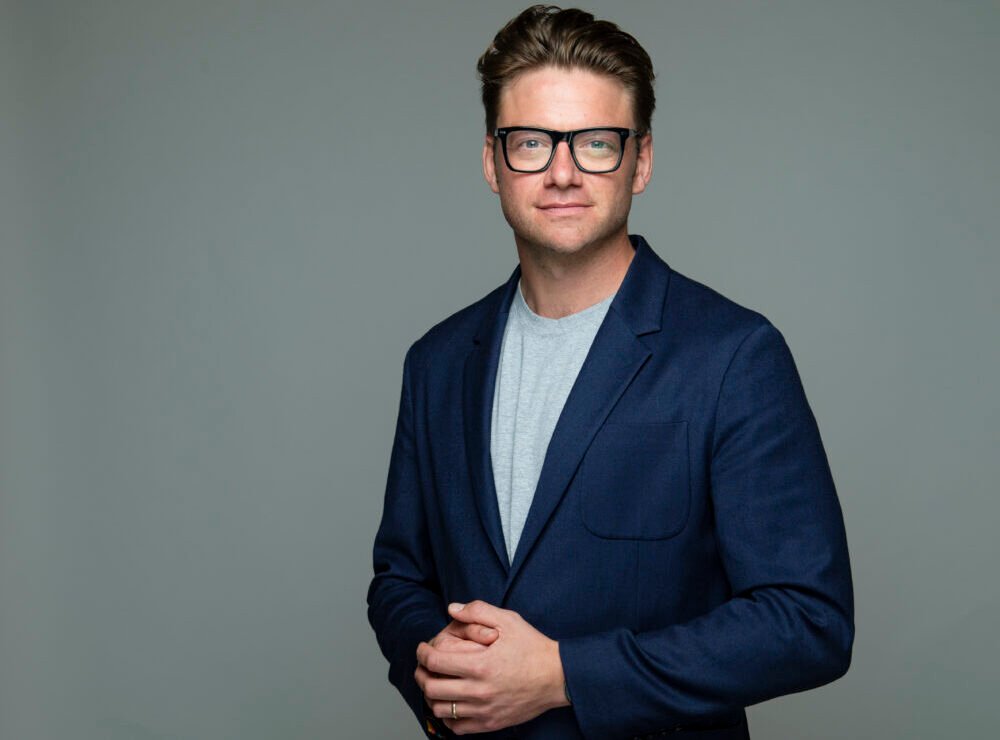
 By Hugh Viney, Founder & CEO, Minerva Virtual Academy
Rethinking traditional models in a world defined by change
Dubai, Aug 3, 2026: For generations, education has been built around a simple premise: students adapt to the system. Fixed schedules, standardised teaching and uniform classrooms have long defined what learning looks like.
But today, that premise is being quietly redefined.
Across the UAE and globally, families are beginning to expect something different—not just quality education, but education that fits into their lives. Recent developments, including the continued availability of flexible learning options alongside traditional schooling, signal a broader shift: learning is no longer tied to a single place, pace or format.
This is not a temporary adjustment. It is a structural change.
The modern student is no longer defined by a single routine. Some are balancing elite sports or performance commitments. Others are navigating anxiety, burnout, or neurodiverse learning needs that traditional classrooms may not fully support. Many families are increasingly mobile, managing travel, relocation, or evolving work patterns.
In these situations, the challenge is not academic ability; it is alignment. Traditional education systems are built on consistency: fixed timetables, standard progression and uniform expectations. But as life becomes more dynamic, these structures can feel restrictive rather than supportive. Flexibility, in this context, is not about making learning easier. It is about making it possible.
Flexible learning is often misunderstood as simply ‘online education.’ In reality, it represents a broader rethink of how students engage with knowledge. Increasingly, students are able to learn foundational concepts at their own pace—through video, guided content and interactive tools—before applying that knowledge in live, discussion-based sessions. This shift transforms the role of teaching from instruction to engagement.
The result is a more active learning experience, where students arrive prepared, ask better questions, and participate with greater confidence. For many, particularly those who may have felt overlooked or hesitant in traditional classrooms, this creates a more inclusive and effective environment. Models such as Minerva Virtual Academy are already embedding this approach, combining structured academic rigour with the flexibility for students to engage in ways that suit their individual learning styles and circumstances.
Another defining shift is the growing recognition that well-being is central, not secondary, to education. In rigid systems, well-being is often addressed only when issues arise. In more flexible environments, it is built into the structure itself. Students who have control over their schedules, access to one-to-one mentorship and the ability to learn in ways that suit them are more likely to feel supported rather than pressured. And when students feel supported, academic outcomes tend to follow.
Technology plays a key role in enabling this shift, but its value lies in how it is used. Rather than replacing teachers, it allows for more personalised and responsive learning experiences. Students can revisit material, receive real-time feedback and engage in ways that align with their learning style. Educators, in turn, can focus more on teaching and mentoring, rather than administrative tasks. In this sense, technology becomes a bridge—not a barrier—between students and learning.
One of the common concerns around flexible learning is the perceived lack of community. Yet, in practice, many students are experiencing the opposite. Live interactive sessions, peer discussions and in-person meetups are creating new forms of connection—ones that are often more intentional and inclusive. Families are forming networks, students are collaborating across locations, and learning is no longer limited by geography. Flexibility, rather than isolating students, is expanding their world.
Education has always evolved alongside society. Today, that evolution is accelerating. The shift toward flexibility reflects a deeper understanding: that students learn differently, live differently and require systems that recognise those differences. Traditional models will continue to play an important role. But alongside them, more adaptive approaches will become increasingly central to how education is delivered.
Because in a world defined by change, the ability to learn flexibly is no longer an added advantage. It is becoming essential.