 Staff
Staff
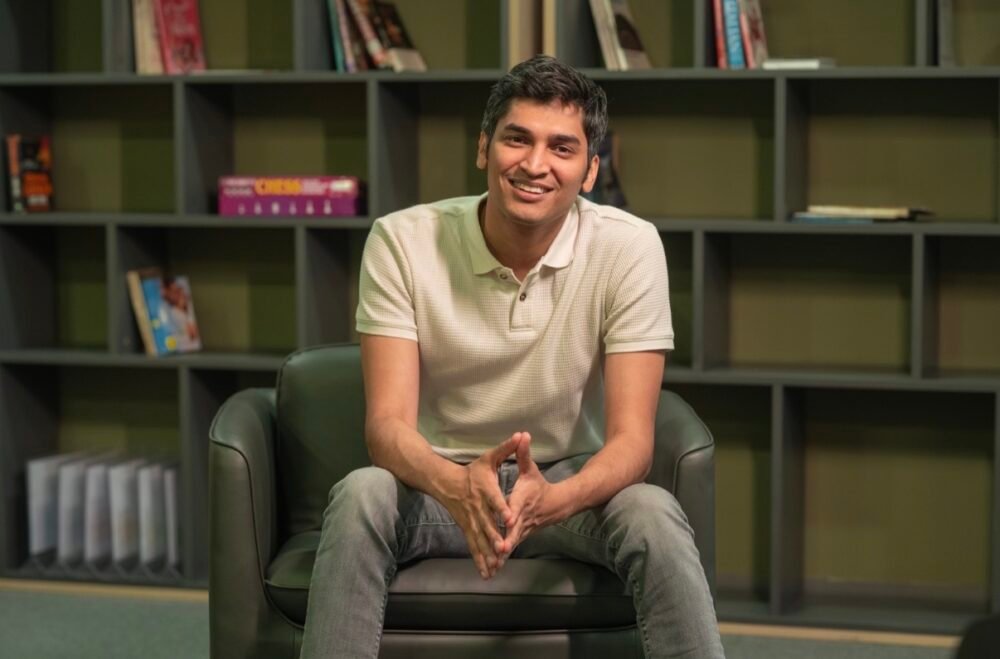
Entrepreneurship embedded in core curricula, interdisciplinary programmes, real-world projects, start-up incubation and cross-border exposure… Dubai’s universities are experimenting with agile, practice-led models, says Pratham Mittal, Founder, Tetr College of Business
For decades, the pathway to a successful career in business appeared relatively predictable. A university degree, often followed by an MBA, was widely viewed as the defining credential for aspiring leaders. Business education was built around structured curricula, case studies, internships and a gradual transition into corporate roles.
But the global economy that today’s students are preparing to enter looks very different from the one those models were originally designed for.
Technological disruption, geopolitical shifts, artificial intelligence (AI) and rapidly evolving industries are constantly reshaping the nature of work. Entire sectors are being redefined at a pace that traditional educational frameworks often struggle to match. In such an environment, the ability to adapt, experiment and learn through experience is becoming just as important as theoretical knowledge.
This shift is prompting a deeper question across the education sector: how should universities evolve to better prepare students for a world defined by uncertainty and constant change?
Across the globe, higher education institutions are beginning to explore new approaches to learning. Some are integrating entrepreneurship into core curricula. Others are introducing interdisciplinary programmes that combine technology, business and design. Many are also placing greater emphasis on experiential learning, encouraging students to engage with real-world challenges rather than studying them purely through textbooks.
Cities are increasingly becoming important platforms where these educational experiments unfold. In this context, Dubai is emerging as a particularly compelling environment for alternative higher education models.
Over the past two decades, the emirate has evolved into one of the world’s most globally connected business hubs, linking markets across Asia, Europe and Africa. Its economic diversification strategy has produced thriving sectors ranging from aviation and logistics to fintech, tourism and real estate. This dynamic business environment naturally lends itself to more practice-oriented forms of education.
Students studying in Dubai are not only exposed to academic programmes but also to an ecosystem where entrepreneurship, investment and global trade are happening in real time. The proximity between universities, start-ups, multinational companies and venture capital networks creates opportunities for students to interact with the industries they aspire to join.
Dubai’s higher education landscape itself reflects this growing momentum. The emirate has seen a steady expansion of private universities, international branch campuses and specialised institutions offering programmes tailored to emerging sectors. Alongside traditional degrees, many institutions are now introducing courses focused on entrepreneurship, digital innovation, sustainability and the future of work.
Some universities are experimenting with curriculum models that incorporate start-up incubation, project-based learning and cross-border exposure. Others are embedding industry collaboration directly into academic programmes, allowing students to work on real business challenges with companies operating in the region.
Another notable trend is the increasing emphasis on global mobility within education. Programmes that allow students to study across multiple cities, participate in international startup ecosystems, or collaborate with diverse teams are becoming more common. This reflects a broader recognition that business and innovation are inherently global in nature.
Dubai’s multicultural environment further strengthens this model. With residents representing more than 200 nationalities, the city offers a unique setting where students are exposed to diverse perspectives, markets and cultural dynamics. Such exposure can be particularly valuable for students interested in entrepreneurship, global trade, or international business leadership.
Government policy has also played a role in enabling this evolution. Initiatives aimed at positioning Dubai as a knowledge economy have encouraged educational institutions to innovate, partner with industry and explore new programme formats. The city’s regulatory openness and infrastructure for international collaboration make it easier for institutions to pilot new ideas in education.
As a result, the boundaries between traditional universities, start-up ecosystems and innovation hubs are gradually beginning to blur. Higher education is no longer confined to lecture halls alone; it is increasingly taking place within real business environments where students can observe, participate and experiment.
Dubai’s role in this transformation is still evolving, but the early signals are clear. By combining a dynamic economy, a global student population and a willingness to experiment with new ideas, the city is becoming an important testing ground for how higher education might adapt to the needs of the future workforce.
If these trends continue, Dubai could play a significant role in shaping the next generation of learning models where education is not only about acquiring knowledge, but also about developing the ability to build, adapt and innovate in an ever-changing world.