 Staff
Staff
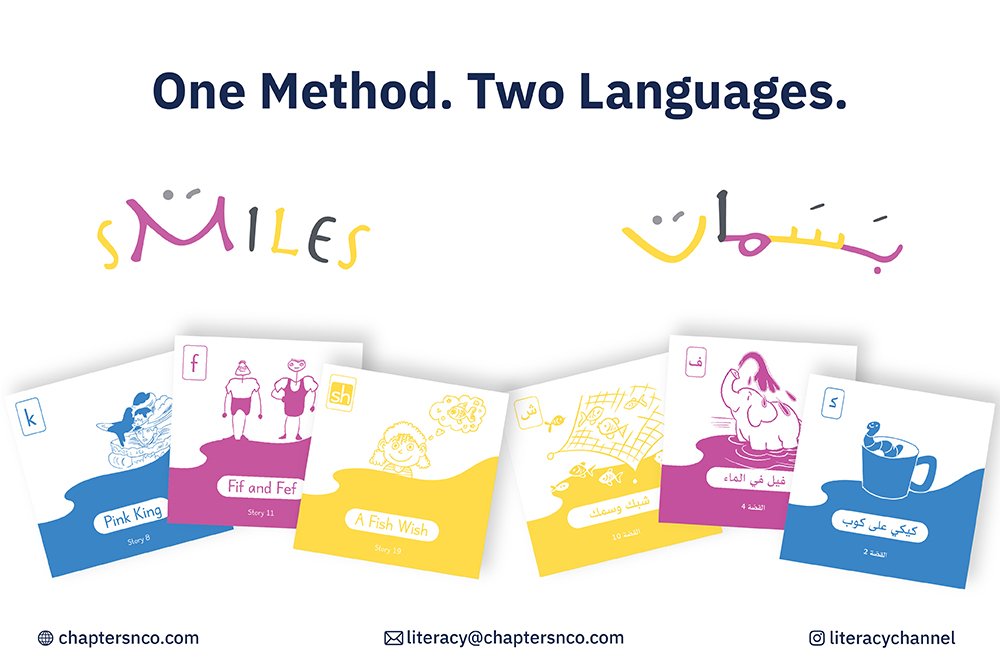
Chapters & Co’s sMiles for English and Basamat for Arabic take children on a structured journey from sounds to words, connected text and meaningful expression, combining explicit instruction and guided practice with decodable reading, vocabulary, comprehension, handwriting and storytelling
Dubai, Sept 4, 2026: Learning letters and sounds is only the beginning. The real goal of early literacy is helping children use what they know to read words, understand stories, express ideas and gradually become independent readers
That transition does not happen automatically. Children need a carefully structured pathway that connects sound awareness, letter knowledge, decoding, vocabulary, comprehension, writing and storytelling in a logical sequence. When these elements are taught as isolated skills, children may perform well in individual activities yet struggle to transfer what they have learned to real reading.
Chapters & Co developed sMiles for English and Basamat for Arabic around this challenge. Both programmes are designed to move children systematically from sounds to words, from words to connected text, and from reading to meaningful expression.
Although English and Arabic have very different writing systems, the underlying learning journey can still be coherent. sMiles and Basamat therefore follow a shared instructional philosophy while respecting the linguistic structure of each language. This creates a more consistent experience for children learning to read in bilingual school environments.
Lessons combine explicit instruction with guided practice, decodable reading, vocabulary development, comprehension, handwriting and opportunities to tell and write stories. Visual language and illustration are also used as early tools for expression, allowing children to communicate meaning before their writing skills are fully developed.
The approach extends beyond individual lessons. Teachers are encouraged to give children regular opportunities to apply literacy through creative, informative and opinion-based projects, supported by guided play and classroom learning centres.
For schools, the objective is not simply to cover phonics content. It is to build a literacy pathway in which each stage prepares children for the next, reducing unnecessary complexity while strengthening transfer to independent reading.
With sMiles and Basamat, Chapters & Co brings this approach together under one principle: One Method. Two Languages.
For schools reviewing their early years literacy provision, the question is simple: are children learning literacy skills, or are those skills actually becoming reading?
That distinction can shape how confidently they enter the next stage of learning.