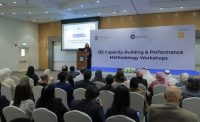
 By Aows Dargazali, Founder of Ostathi and EMEA Director of UniHouse
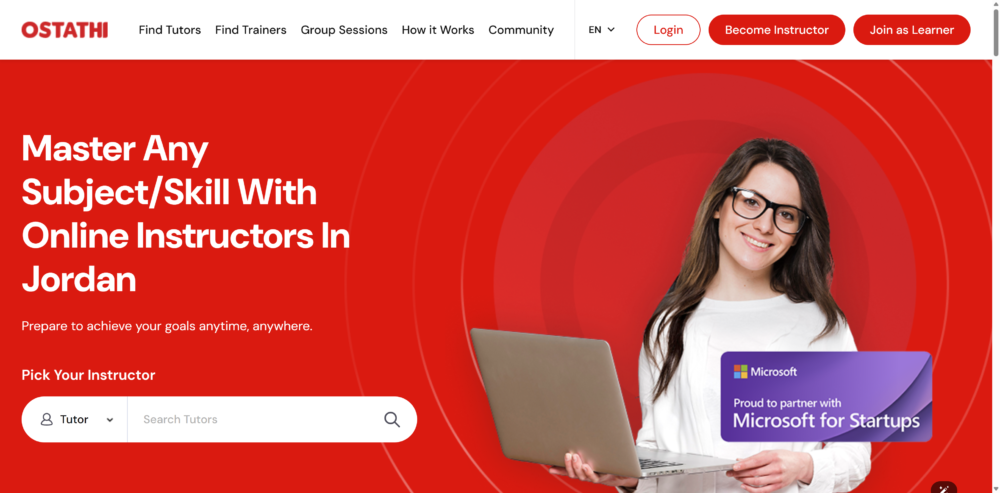
From payment barriers to credential recognition, systemic gaps continue to limit educator participation in the digital economy across MENA. A new regional platform aims to change this
Dubai, Apr 29, 2026: Ask any educator, tutor, or education consultant across the Middle East about global freelance platforms and you will hear the same story. Upwork. Fiverr. Freelancer. The platforms exist but they were not built for this region. Payment systems do not work. Local qualifications are not recognised. And professionals from Amman or Cairo compete directly against providers from markets where pricing is a fraction of theirs.
The talent is there. The demand is there. The infrastructure is not.
A regional problem needs a regional solution
Payment fragmentation is one of the most significant structural barriers to digital professional participation across MENA. International platforms require Stripe, PayPal and international bank transfers, unavailable or restricted across Jordan, Egypt, Morocco and beyond.
For school leaders, TVET managers and institutions, the problem runs deeper. Global platforms provide no verification of local qualifications, no alignment with regional curriculum frameworks and no accountability structures when engaging educators, trainers, or consultants. This is not a technology gap. It is an infrastructure gap.
Two communities, one platform
Ostathi Jordan, operated by UniHouse Global Ltd, serves two connected professional communities.
The first is educators and tutors — subject specialists, language teachers, digital skills trainers and TVET assessors seeking verified professional profiles and reliable regional income.
The second is consultants and advisors — professionals working at institutional level across Education Reform and Assessment, TVET and Workforce Development, Digital Workforce and Gig Economy, MSME Development, Infrastructure Capacity Building and Scholarship Programme Management. For GCC school principals and TVET managers, this means access to a credentialed regional expert pool, not an unverified global directory.
Ostathi’s proprietary digital ledger connects professional profiles, competency certifications, and income flows into a single auditable chain, integrated with regulated national fintech platforms. Through UniHouse’s WEE™ framework, every professional moves through competency assessment, profile building, client acquisition and into sustainable income generation in eight stages pathway. Full documentation at UniHouse Resources.

Built on 25 years of regional experience
Ostathi is built by UniHouse Global Ltd, officially recognised by the UK Department for Business and Trade as a leading UK provider of education and digital innovation for the Middle East. The UK FCDO has featured UniHouse describing the work as “transforming teachers and trainers into entrepreneurs.” Supported by Microsoft’s Founders Hub, Ostathi is live in Jordan with hundreds of tutors and consultants registered, expanding into Egypt, Morocco, Saudi Arabia and Turkey.
The Middle East does not need another global platform with a language setting. It needs infrastructure built from the ground up for its educators, consultants, payment systems and learners. That infrastructure exists today.
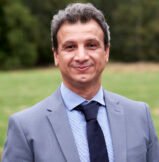
Author
Aows Dargazali is the Founder of Ostathi and EMEA Director of UniHouse, Oxford EMBA graduate from Saïd Business School, Chartered Manager (CMI), Google Certified Educator, former Senior Business and Investment Manager at the Australian Trade and Investment Commission, featured by the UK Foreign, Commonwealth & Development Office, with 25 years’ experience working with the World Bank, BP, United Nations, and UK Government.
UniHouse Global Ltd. is a UK-headquartered international advisory firm officially recognised by the UK Department for Business and Trade, delivering structured capacity development systems across Education Reform and Assessment, TVET and Workforce Development, Digital Workforce and Gig Economy, MSME Development, Infrastructure Capacity Building, and Scholarship Programme Management across the Middle East, Africa, and Central Asia.