
 Staff
Staff
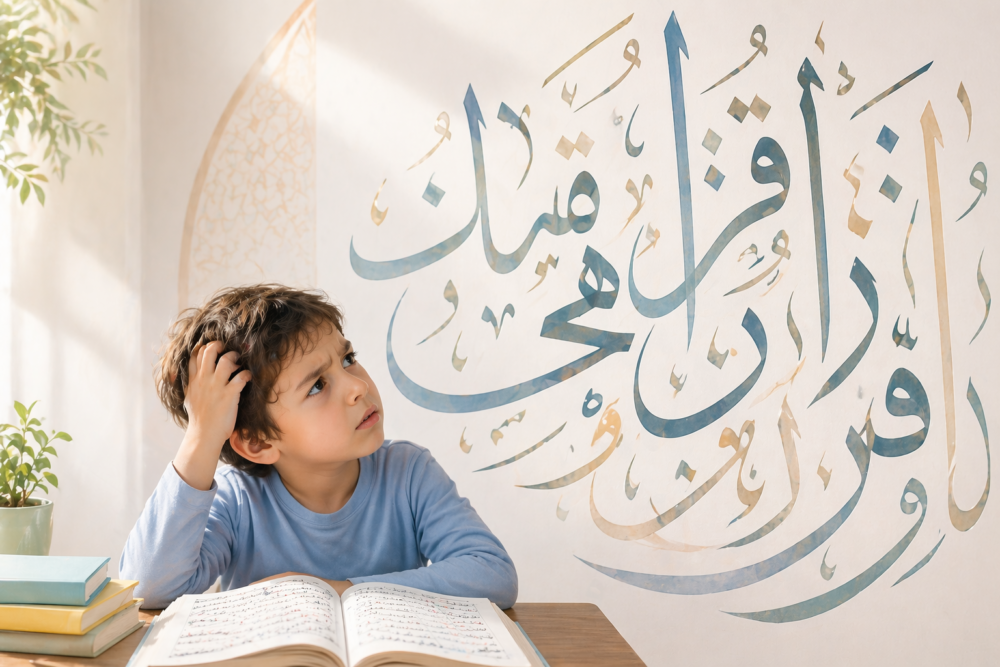
Is Arabic truly more difficult to teach, or have long-held assumptions shaped how it is introduced in classrooms? Dr Wael I. Nasr, MD, Chapters & Co explores how early literacy approaches rather than the language itself may be at the heart of the challenge
Dubai, Apr 28, 2026: When it comes to reading, Arabic is often described as one of the more challenging languages for children to learn. Educators frequently attribute this perception to the complexity of the script, the presence of distinctive consonant sound and the gap between spoken dialects and Modern Standard Arabic. As a result, many assume that learning to read Arabic is inherently more difficult for young learners.
But this perception deserves closer examination. A useful way to explore it is by comparing Arabic with English, one of the most widely taught languages in schools across the Middle East.
Many challenges attributed to Arabic literacy arise not from the language itself, but from how it is introduced.
Orthography and early decoding
In all alphabetic languages, decoding is the gateway to reading. Before children can read fluently or focus on meaning, they must first learn to translate written symbols into the sounds of spoken language. When early literacy instruction prioritises reliable decoding, learners gain the confidence needed to engage with text independently.
With respect to orthography, the relationship between letters and sounds, Arabic presents fewer early decoding challenges than English. English orthography contains numerous vowel sounds and highly variable spelling patterns, whereas Arabic maintains a more consistent relationship between sounds and letters, particularly when vowel markings (ḥarakāt) are present.
Arabic also has a relatively small vowel inventory consisting of three primary vowels that appear in both short and long forms. Compared with English, where vowel pronunciation and spelling patterns vary widely, this structure makes early decoding more predictable for beginning readers.
Another commonly cited challenge is the variation in letter shapes depending on their position within a word. Arabic letters can appear in different forms when they are isolated, at the beginning, in the middle, or at the end of a word. However, each letter retains a consistent visual core that allows learners to recognise it across forms. Similar variation exists in English through uppercase and lowercase letters. When instruction focuses on helping learners identify these stable features, this aspect of the script becomes manageable for early readers.
In practice, the relative consistency of Arabic orthography allows learners to establish a broad mapping between sounds and written symbols more efficiently than in English, where spelling patterns are more varied and require longer exposure to master.
Addressing the difficult sounds
Arabic does contain sounds that require greater articulatory control. Pharyngeal and emphatic consonants, for example, can be more difficult for young learners to produce clearly. When introduced later, once children have developed stronger decoding skills and greater articulatory maturity, these sounds are typically mastered without difficulty.

Addressing the morphology
Arabic morphology introduces additional layers of meaning through its root-and-pattern system. These patterns play an important role in vocabulary growth and comprehension as readers progress. In the earliest stages of reading, however, the priority is building secure decoding. Morphological and grammatical features can be explored more fully once children have established confidence in translating written symbols into spoken sounds.
Addressing diglossia
Another commonly cited challenge is diglossia. While children speak local dialects at home, reading and writing take place in Modern Standard Arabic. Increased exposure to the formal language through storytelling, educational media and children’s programming can help bridge this gap.
When Arabic reading instruction is developmentally aligned and grounded in sound–symbol relationships, literacy can develop smoothly and confidently. The perceived difficulty of Arabic often reflects how reading is introduced rather than the language itself.
— The author is the founder of Chapters & Co, where he pioneers the concept of literacy infrastructure. Rather than viewing reading as a collection of memorised sounds, he approaches literacy through the lens of cognitive architecture, focusing on how precise sequencing and developmental logic drive reading proficiency.
He is the lead architect behind the sMiles and Basamat literacy programmes, which are engineered to align phonics instruction with cognitive development and real-world reading transfer. By addressing the technical design flaws in traditional decoding instruction, specifically in how they handle orthography and sequencing, he helps educators transform reading from a fragile performance into a sustainable skill.