 Staff
Staff
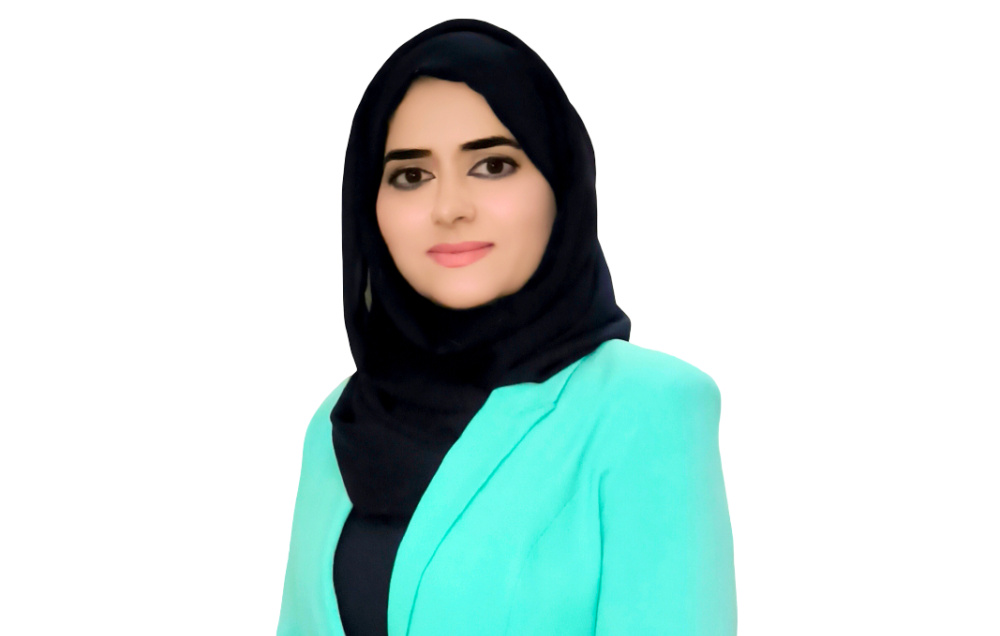
The UAE’s AI curriculum shifts the focus from mastering content to guiding students to become creators, problem-solvers and innovators, says Dr Asmaa Alkhazraji
Dubai, Feb 26, 2026: When His Highness Sheikh Mohammed Bin Rashid Al Maktoum announced that Artificial Intelligence (AI) would be taught from kindergarten to Grade 12, it marked far more than a curriculum reform. It was a strategic vision for the nation’s future, signaling the UAE’s determination to prepare its youth for an era defined by innovation, adaptability and technological leadership.
This pioneering initiative raises a crucial question: how will early AI education redefine the very meaning of learning? For generations, education systems worldwide have emphasised memorisation and content recall. The UAE’s AI curriculum fundamentally shifts this approach, guiding students to become creators, problem-solvers and innovators. Children will not merely study algorithms; they will apply AI tools to design projects, analyse data and address real-world challenges. Learning, in this context, becomes active rather than passive, encouraging curiosity, experimentation and critical thinking from an early age.
The fourth literacy
Traditionally, literacy has centred on reading, writing and numeracy. With the UAE’s AI initiative, a fourth literacy takes its place: Artificial Intelligence. From the earliest years of schooling, students will learn not only traditional literacies but also how machines think, how algorithms make decisions and how humans can interact responsibly with intelligent systems. This holistic approach ensures students are prepared to thrive in a world where human intelligence and machine intelligence increasingly intersect.
Personalisation lies at the heart of this reform. A five-year-old struggling with number patterns can receive AI-powered support that adapts to their pace, transforming difficulty into confidence. Another child, drawn to storytelling, can explore AI-assisted creative writing, nurturing imagination and expression. In this way, every child receives an education tailored to their abilities, interests and learning styles, fostering motivation and a genuine love of learning from an early age.
Teaching responsibility
This reform is not solely about technical skills. It also places strong emphasis on ethical awareness and responsible use of technology. Students are encouraged to ask not only, “What can AI do?” but also, “What should AI do?”
By embedding ethics into AI education from the beginning, the UAE is cultivating a generation of responsible innovators who combine technical expertise with empathy, social awareness and sound judgement.
In a world where jobs are rapidly evolving and many future roles do not yet exist, AI education promotes adaptability as a core skill. Students learn to view continuous learning not as an obligation but as a way of life, turning uncertainty into opportunity and change into growth.
Few nations have institutionalized AI education from kindergarten onwards. By taking this bold step, the UAE is setting a global benchmark. As one of the first countries to introduce AI at such an early stage, it aligns education policy with national innovation goals while offering a blueprint for 21st-century learning worldwide.
Early AI education promises to produce graduates who are adaptable, ethical, and innovative qualities that are increasingly in demand across global economies.
The UAE’s integration of AI education from kindergarten to Grade 12 is more than a curriculum change; it is a strategic investment in the future of learning. By combining traditional academic foundations with AI literacy, personalised learning, ethical reasoning and a lifelong learning mindset, the nation is preparing students to thrive in an increasingly complex world.
Sheikh Mohammed’s vision ensures that education in the UAE is not just about mastering content but about shaping adaptable, responsible and innovative thinkers. For this generation, AI will not be an external tool but an integral part of how they think, create and solve the challenges of tomorrow.